High-Flow Fuel Pump Upgrade Using the Factory Honda/Acura In-Tank Hanger
Introduction
Turbocharged Honda and Acura builds quickly outrun the factory fuel pump and its thin factory wiring, but you do not have to buy a complete aftermarket hanger to feed a bigger pump. This guide covers converting a stock in-tank fuel pump hanger to carry a high-flow pump, heavy-gauge power and ground wiring, and larger AN feed and return plumbing. It applies to the DA/DC Integra and EG/EK-era Civic and CRX platforms that share this style of top-hat hanger, and it is aimed at boosted setups making roughly 500 wheel horsepower and up. The reward is a clean, leak-resistant fuel supply that keeps the original sealing geometry instead of relying on aftermarket pass-through fittings. Several routes are shown, from the simplest OEM-style approach to fully re-plumbed hangers, so you can match the effort to your power target and fuel. Adapted from a community writeup by ESP.net on Honda-Tech (https://honda-tech.com/forums/forced-induction-16/how-one-way-using-oem-fuel-pump-hanger-upgraded-pump-10-gauge-wire-relay-3321155/), including corrections from the follow-up discussion.
Reference
Tools Required
- Soldering iron and rosin-core solder
- Wire strippers and ratcheting crimp tool
- Terminal de-pinning pick or small flat pick
- Drill with bits
- Thread taps (M14x1.25 and/or NPT to suit chosen AN fittings)
- AN wrenches
- Multimeter
Parts Required
-
High-flow in-tank pump (e.g. Aero Stealth 340 or Walbro 450)
-
Fuel-rated 10 AWG wire for power and ground (8 AWG for higher-current builds)
-
Bosch-style automotive relay
-
30 amp inline circuit breaker
-
Insulated female spade terminals sized for the hanger tabs
-
Banjo-to--6AN 90 degree smooth-bend fitting (e.g. B&R Fittings) for 94-97 Integra hangers
-
-6AN feed line and fittings (step up to -8AN for high-power builds)
-
Inline micron fuel filter
-
M14x1.25-to--8AN or NPT-to-AN bulkhead fittings (only if converting the hard lines)
-
Fuel-resistant tank epoxy or sealant (only if drilling the top hat for wires)
-
Optional: JBtuned Walbro 450 hanger mod kit, or ATL bulkhead wire fitting
Safety Warnings
- ⚠ Fuel work is a fire hazard: relieve fuel pressure, disconnect the battery, work in a well-ventilated area, and keep all ignition sources away.
- ⚠ Use only fuel-rated wire insulation; ordinary wire can allow fuel to wick through the strands and out of the tank.
- ⚠ Never use a loose grommet-and-stud pass-through: a shifting stud can short to the tank and power or ground the tank, frying the pump and sending-unit wiring.
- ⚠ Protect the heavy-gauge power circuit with an appropriately rated inline breaker or fuse.
- ⚠ Ensure any sealant or epoxy used on the top hat is rated for continuous fuel immersion and fully cured before reinstalling.
Step-by-Step Instructions
1 Plan the pump, wiring, and power target
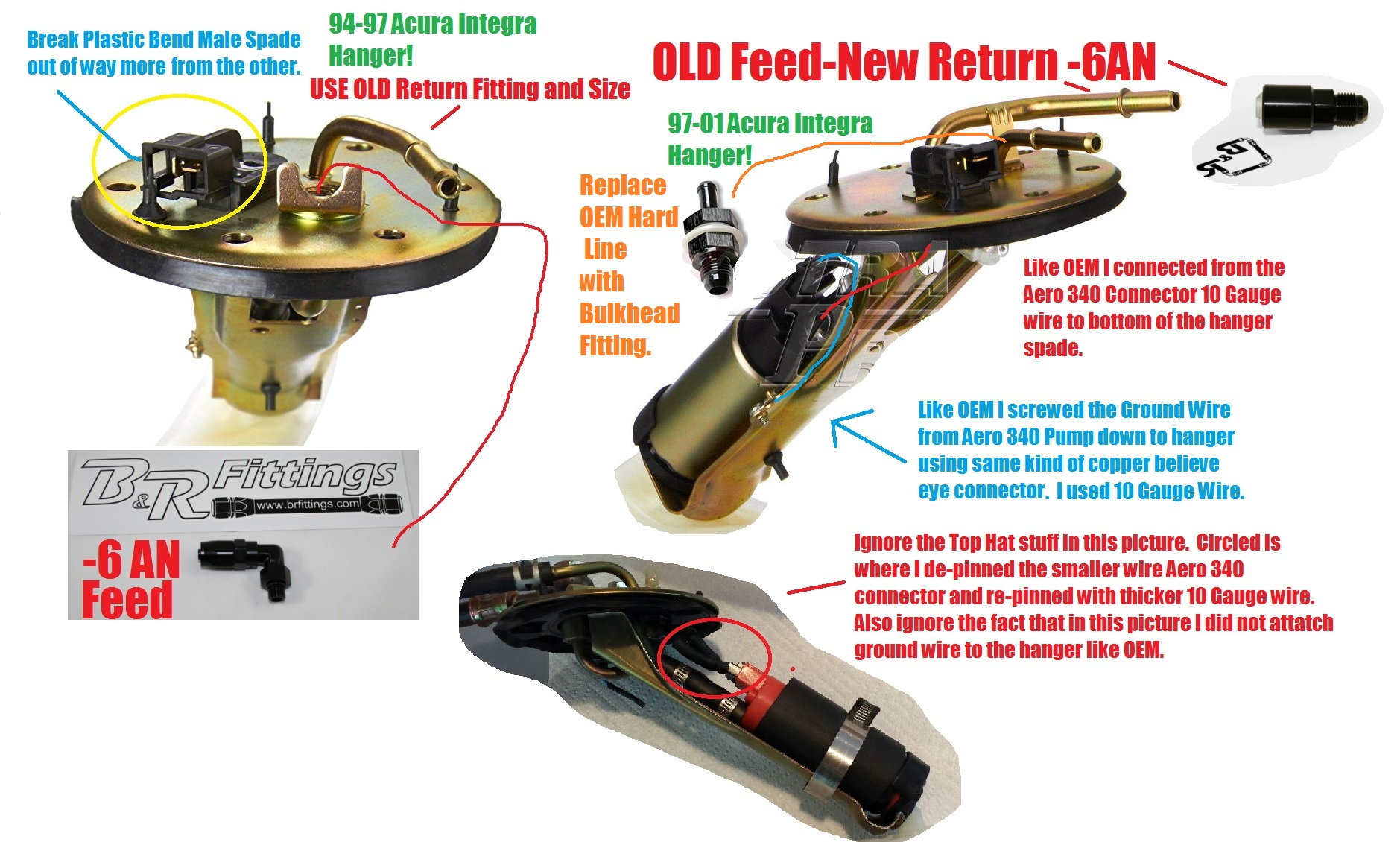
Decide your power goal before touching the hanger, because it drives every other choice. For pump-gas builds up to roughly 600 hp, a -6AN feed with the stock-size return and 10 AWG wiring is adequate; the incremental voltage drop of 10 AWG through a spade terminal is minor and still far better than 12 or 14 AWG. For builds beyond 600 hp or E85, plan on a larger -8AN feed and a dedicated -6AN return. Select a high-flow in-tank pump such as an Aero Stealth 340 or Walbro 450 to suit the plan. As a real-world reference point, the source build ran an Aero 340 with 1150cc Grams injectors at about 67 percent duty on pump gas, feeding a turbo 2.3L making 500 wheel horsepower.
2 Bring heavy-gauge wire to the pump the factory way
The cleanest and most leak-free method reuses the hanger's original wire pass-throughs rather than drilling new holes. Route the ground to the hanger's grounding point and run the power lead to the OEM spade connection, exactly as the factory circuit was arranged. De-pin the pump's own connector, then solder the heavy-gauge power wire directly to the pump lead so the pump is fed by 10 AWG (or 8 AWG) all the way to the motor rather than a thin factory pigtail. Keeping the wire routed through the sealed OEM insulator this way sidesteps the fuel-wicking and sealing problems that come with aftermarket pass-through fittings.
3 Terminate the wires at the top hat
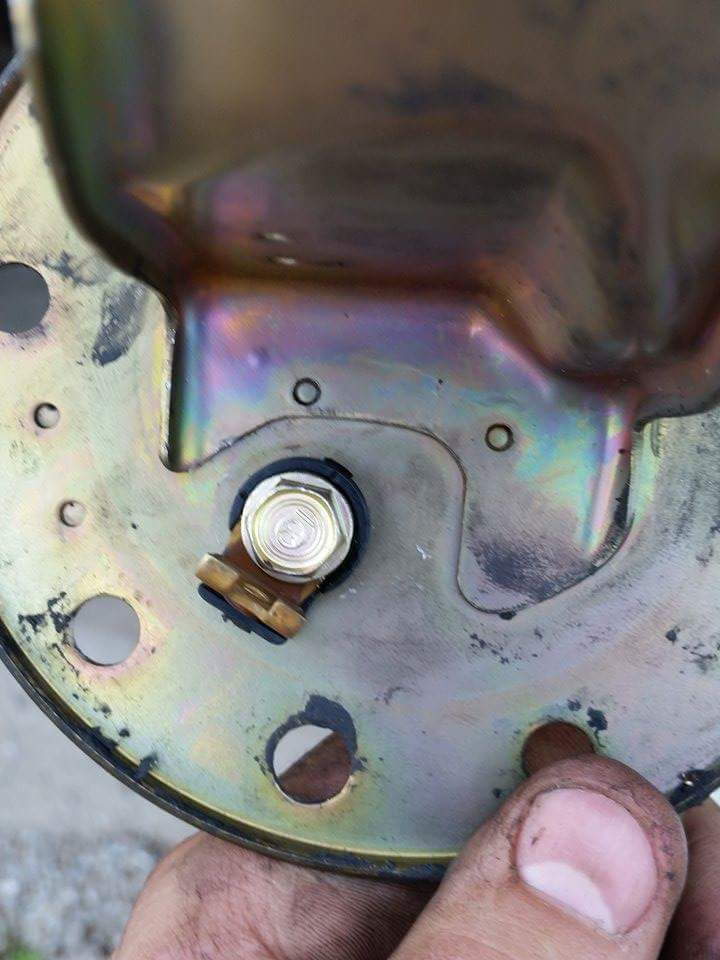
Reuse the factory spade terminals on the top hat, but give yourself working room: break away one side of the shared connector body so the two spade tabs are separated. Crimp a tight insulated female terminal onto each heavy-gauge wire and push it firmly onto its tab, confirming a snug, positive fit on both the power and sending-unit circuits. If you dislike spades, an alternative is to trim the plastic off the original power-wire bulkhead and fit an M6 capscrew and nut as a stud, which slides into the factory insulator through the hanger. Whatever you choose, do NOT use a loose rubber-grommet-and-stud arrangement: the stud can shift and short against the tank, powering or grounding the tank and frying the pump and sender wiring.
4 Convert the feed to an AN line

On a 94-97 Acura Integra hanger the feed uses a banjo boss on the top hat, which is convenient: thread a banjo-to--6AN 90 degree fitting (such as the B&R Fittings piece) into that boss to pick up the feed. Use a smooth-bend fitting rather than a hard 90, because a sharp bend at the pump outlet promotes cavitation. From there run -6AN line to the engine. If your hanger instead has a tapped boss, an alternative used by builders is to drill out the banjo location and tap it for an NPT/AN fitting (for example M14x1.25 to -8AN).
5 Add the inline filter and handle the return
Install an inline micron filter in the feed line downstream of the pump. For the return, the simplest build keeps the smaller factory return hard line, which is fine at moderate power. To go larger, the 98-01 Integra hanger carries two hard lines with no banjo, which lets you repurpose one larger hard line as an upsized return: cut the return pipe from the top and bottom of the hanger, drill it out, and tap it for a bulkhead fitting (for example M14x1.25 to -8AN). Builders drilling out the old return pipe commonly install an ATL-type bulkhead fitting there. If you upsize the feed to a -6AN quick-disconnect line, that line can instead become the new -6AN return, in which case you must still work out a solution for the feed.
6 Weigh the kit and bulkhead alternatives
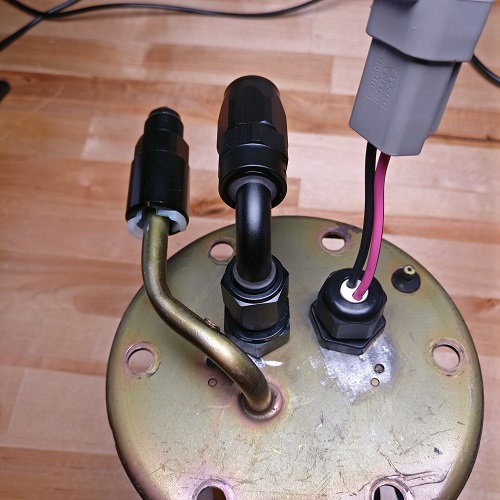
If you prefer a packaged solution, a JBtuned Walbro 450 hanger mod kit is available in -6AN and -8AN versions, and also for the 340/320 pumps. It uses smooth-bend fittings instead of hard 90s, avoiding the cavitation concern. Be cautious with aftermarket two-wire bulkhead wire fittings such as the ATL part: they are offered in 12 and 14 AWG only, not 10 AWG. Enlarging the wire holes to force in 10 AWG risks a poor seal, and fuel can wick through the strands of wire that is not fuel-rated, so this route can create more work than the OEM pass-through method.
7 Wire the relay circuit
Power the pump through a dedicated relay so the heavy-gauge circuit is switched cleanly and does not load the factory pump wiring. Feed relay power from the alternator, ground the pump circuit to the battery ground, and protect the heavy-gauge run with a 30 amp inline circuit breaker. Use a Bosch-style relay triggered by the original pump control signal. Confirm the pump sees full system voltage under load with a multimeter.
8 Seal, reinstall, and pressure-test
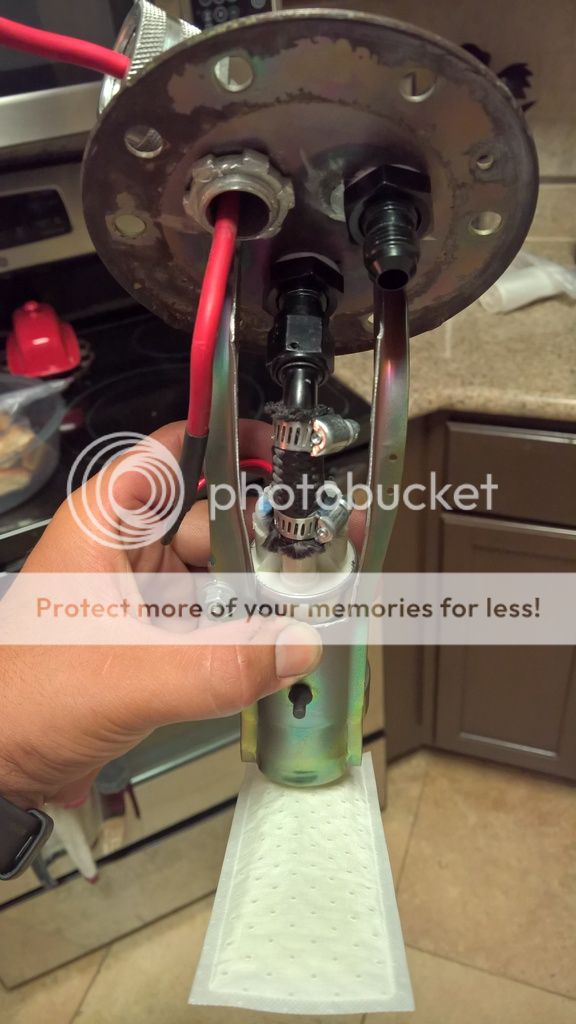
If any part of your chosen method required drilling the top hat, seal those openings with a fuel-resistant tank epoxy and let it fully cure before reassembly. Reinstall the hanger with a fresh gasket or O-ring, reconnect the feed, return, and electrical connections, and then cycle the pump with the lines connected but the engine off. Check for fuel weeping at every fitting and around the top hat, and watch for any sign of the wiring circuit backfeeding the tank. Only return the car to service once the system holds pressure with no leaks.
Pro Tips
- 💡 10 AWG wiring with a -6AN feed and stock-size return is generally good to about 600 hp on pump gas; step up to -8AN feed and -6AN return for beyond 600 hp or E85.
- 💡 The 94-97 Integra hanger's factory banjo boss makes a -6 or -8AN feed adapter easy; 98-01 Integra hangers instead have two hard lines and no banjo.
- 💡 Always use smooth-bend fittings at the pump outlet; a hard 90 degree fitting encourages cavitation.
- 💡 Keeping the heavy-gauge wire routed through the sealed factory insulator avoids the sealing and fuel-wicking issues of aftermarket pass-through bulkhead fittings.
- 💡 quickhondaz reports fully removing all stock fuel lines in favor of higher-flowing AN lines to leave room to grow power later.
Was this guide helpful?