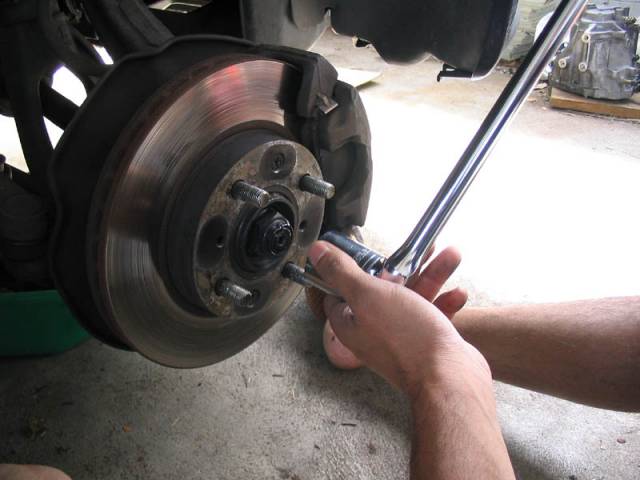
Acura RDX Automatic Transmission Fluid Drain and Fill (1st Gen)
Introduction
This guide covers a drain-and-fill service of the automatic transmission on the first-generation, turbocharged Acura RDX (2007-2012), performed here on a 2008 model. A drain-and-fill exchanges the fluid that the case will release through its drain plug and is a simple way to refresh degraded automatic transmission fluid on a regular maintenance interval; it does not fully flush the torque converter or cooler lines. The factory specification for this gearbox is Honda ATF-Z1. The original writer substituted Castrol Import Multi-Vehicle ATF, which is marketed as meeting the Z1 requirement, but running the factory-specified fluid is the conservative choice. Mechanically the job is easy; the real challenges are the unlabeled fill plug buried beside the brake fluid reservoir and the patience it takes to route a funnel down to it. The method returns the same measured volume that came out, which on this service was roughly 3.7 to 3.8 quarts. Adapted from a community writeup by ptrapper65 on AcuraZine (https://acurazine.com/forums/1g-rdx-diy-faq-161/diy-acura-rdx-tranny-fluid-change-792834/), including corrections from the follow-up discussion.
Reference
Tools Required
- 17mm socket
- 3/8-inch drive ratchet
- About 16 inches of 3/8-inch extensions (for example, three 6-inch extensions)
- Phillips screwdriver
- Flat-blade screwdriver
- Long flexible funnel
- Container marked in quarts to catch and measure the old fluid
- Drive-on ramps or a jack and jack stands (optional)
Parts Required
-
Automatic transmission fluid, Honda ATF-Z1 (or a fluid meeting the Z1 specification) - about 4 quarts
-
New drain plug crush washer
-
New fill plug crush washer
-
Absorbent such as Speedy Dry or cat litter
-
Shop rags
Safety Warnings
- ⚠ Support the vehicle only on rated ramps or jack stands before going underneath; never rely on a jack alone.
- ⚠ Automatic transmission fluid thrown from the drain travels much farther than motor oil, so spread absorbent well beyond the plug and protect your driveway.
- ⚠ Warm ATF can burn; if the car has just been driven, let the transmission cool before opening either plug.
Step-by-Step Instructions
1 Assemble materials and position the vehicle
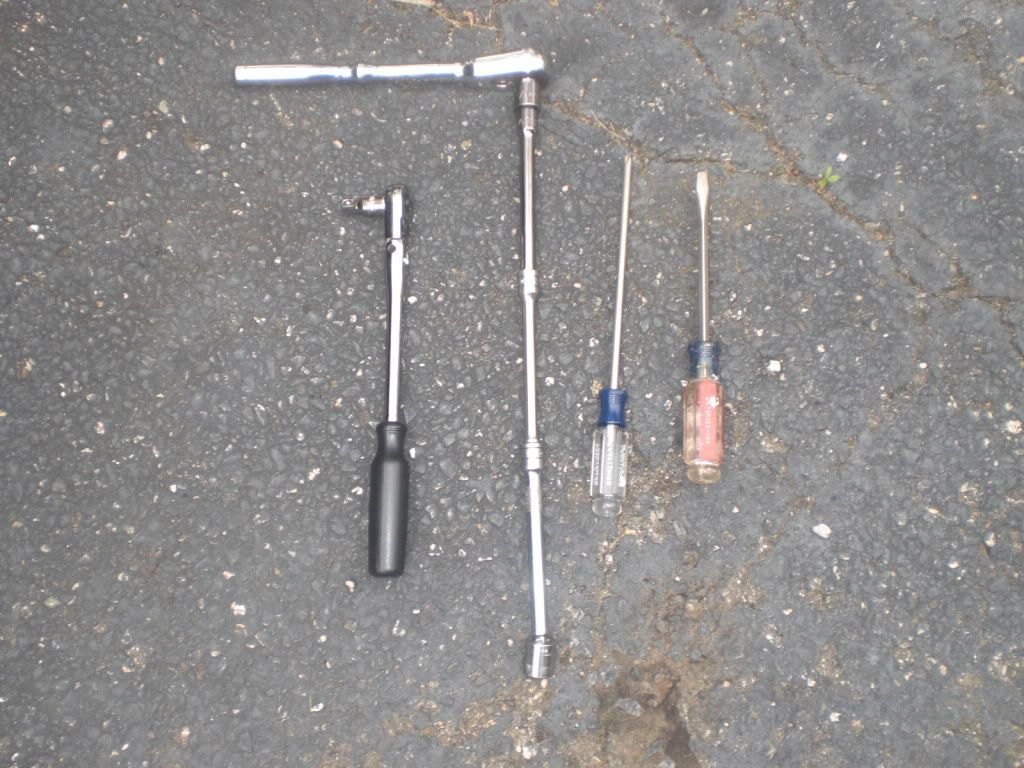
Have four quarts of automatic transmission fluid ready; the factory specification is Honda ATF-Z1. Set out shop rags, a wide absorbent such as Speedy Dry or cat litter, a long flexible funnel, and a container marked in quarts to catch and measure the old fluid. You can drive the front wheels onto ramps for clearance, but raising the car high makes the draining fluid spray farther and burns through more absorbent, so working with the vehicle lower keeps the mess contained. If the car has just been driven, let the transmission cool so the fluid is warm rather than scalding.
2 Expose the fill plug on top of the transmission
The fill plug sits on the upper side of the case, tucked beneath the brake fluid reservoir, and it carries no marking to identify it. To reach it, unclip and lift off the plastic decorative cover over the turbocharger, then detach the turbo fresh-air intake tube so the plug and the space above it are clear. Opening up this area now also gives the funnel a path down to the port later.
3 Remove the fill plug before draining anything
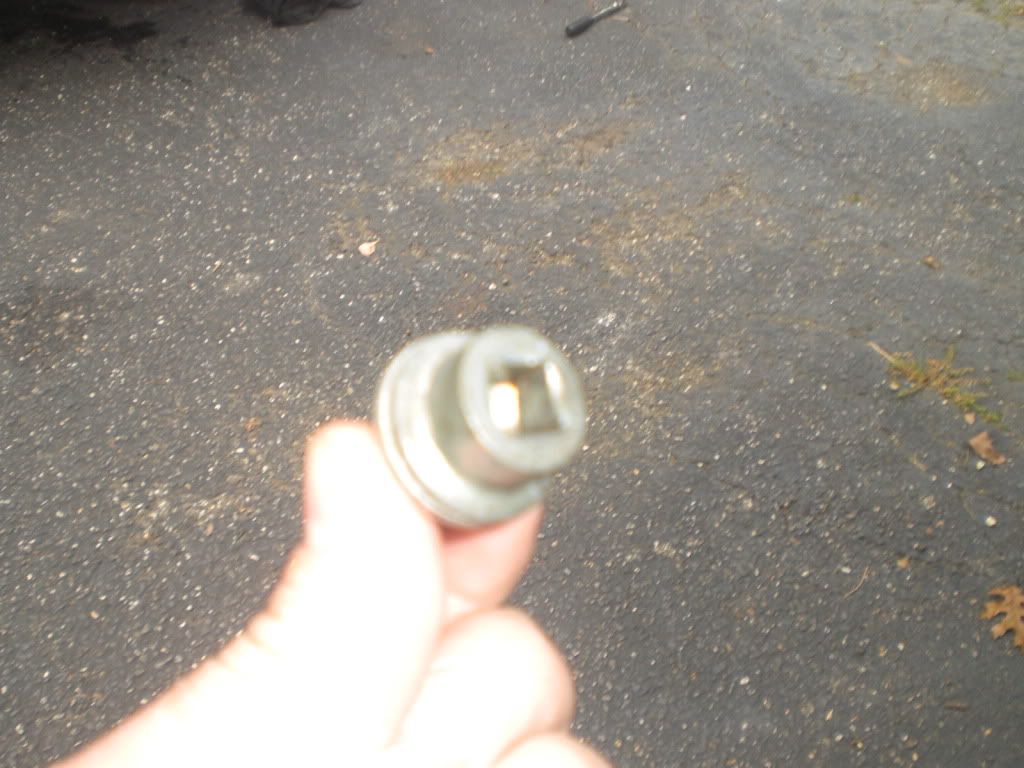
Fit a 17mm socket onto roughly sixteen inches of extensions - three six-inch extensions work well - and back the fill plug out. Do this first as a deliberate check: if the plug will not loosen, or the funnel cannot be threaded down to the opening, you have no practical way to add fluid back and should stop before emptying the transmission. Feed the funnel toward the fill hole now, easing it past the surrounding hoses and using a screwdriver to guide and bend it into place, and confirm it seats. Filling through the dipstick tube is possible, but that tube is only about 9mm across and fills painfully slowly, so the dedicated port is worth the effort.
4 Drain the old fluid
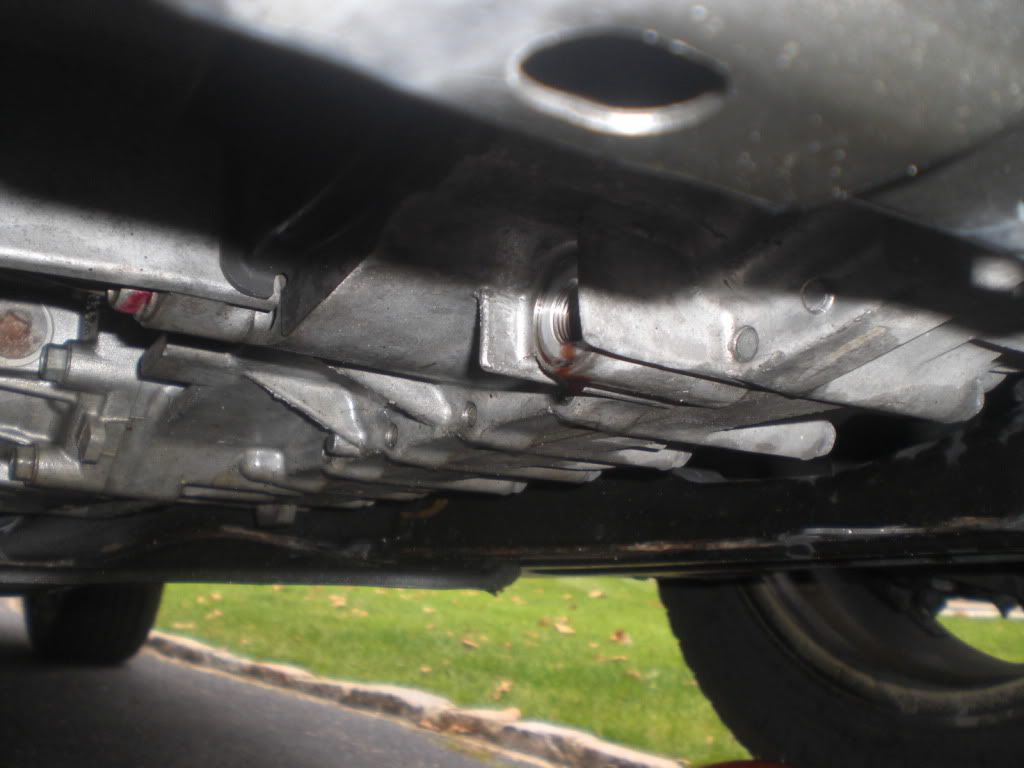
Move underneath to the drain plug, which is on the bottom of the transmission toward the passenger side near the front of the car and, like the fill plug, is unmarked. Its head takes a 3/8-inch square drive directly, so insert a 3/8-inch ratchet with no socket attached and turn the plug out. The fluid leaves quickly once the plug clears, so have the measuring container positioned to catch it. Let it run until the stream slows to a drip.
5 Reseal the drain plug
Wipe the plug and its sealing face clean, fit a new crush washer, and thread the plug back in by hand to avoid cross-threading before tightening it snugly. Using a fresh washer every time keeps the joint from seeping.
6 Measure and add the same volume
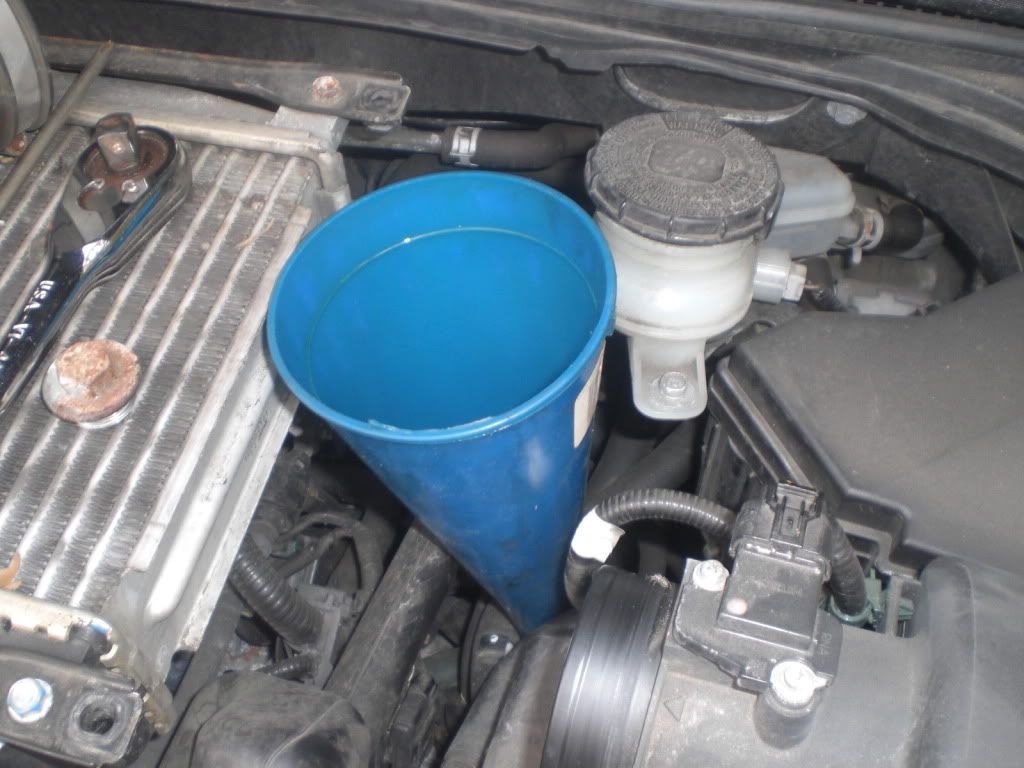
Read how much fluid you captured; this service yielded about 3.7 to 3.8 quarts. Pour that identical quantity of new fluid through the funnel into the fill port, because matching what came out is what sets the level correctly on this transmission. Pour slowly enough that the narrow funnel does not back up and overflow.
7 Close everything back up
Withdraw the funnel and reinstall the 17mm fill plug with its own new crush washer. Nudge any hoses you shifted back to their original routing, refit the turbo fresh-air intake tube, and clip the decorative cover back over the turbocharger.
8 Run the engine and verify the level
Start the engine and let it idle briefly so the new fluid circulates, then shut it off. On the RDX the correct reading is taken 30 to 60 seconds after the engine stops, not while it is running. Confirm the level sits in range; because you returned exactly what you drained, it should already be correct. Clean up any spilled fluid with the absorbent.
Pro Tips
- 💡 Prove that you can both loosen the fill plug and seat the funnel before you touch the drain plug, so you are never left with an empty transmission you cannot refill.
- 💡 Keeping the car lower rather than high on ramps reduces how far the draining fluid sprays and how much absorbent you need.
- 💡 The factory fluid is Honda ATF-Z1; the original writer used Castrol Import Multi-Vehicle ATF as a substitute claimed to meet the Z1 spec, but the factory fluid is the safe choice.
- 💡 Guide the funnel down with a screwdriver, bending it gently around the hoses rather than forcing it.
Was this guide helpful?