K-series charge (charging and starting) harness

K-series charge (charging and starting) harness

Electrical Charging and starting power distribution Verified Modification Required

Compatibility Overview

Source Vehicle

RSX Type S

Generation: DC5

Years: 2002-2006

Target Vehicle

Civic (EG/EK) and Integra (DC2)

Generation: EG / EK / DC2

Years: 1992-2001

Installation Difficulty

Easy Basic tools
Moderate Some experience
Difficult Skilled work
Expert Professional
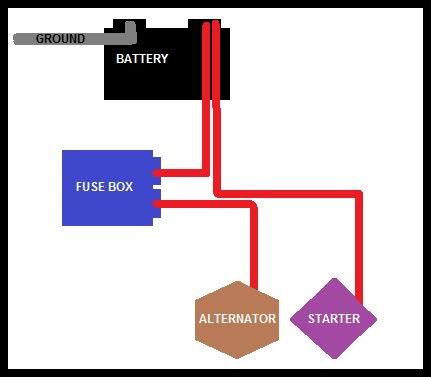
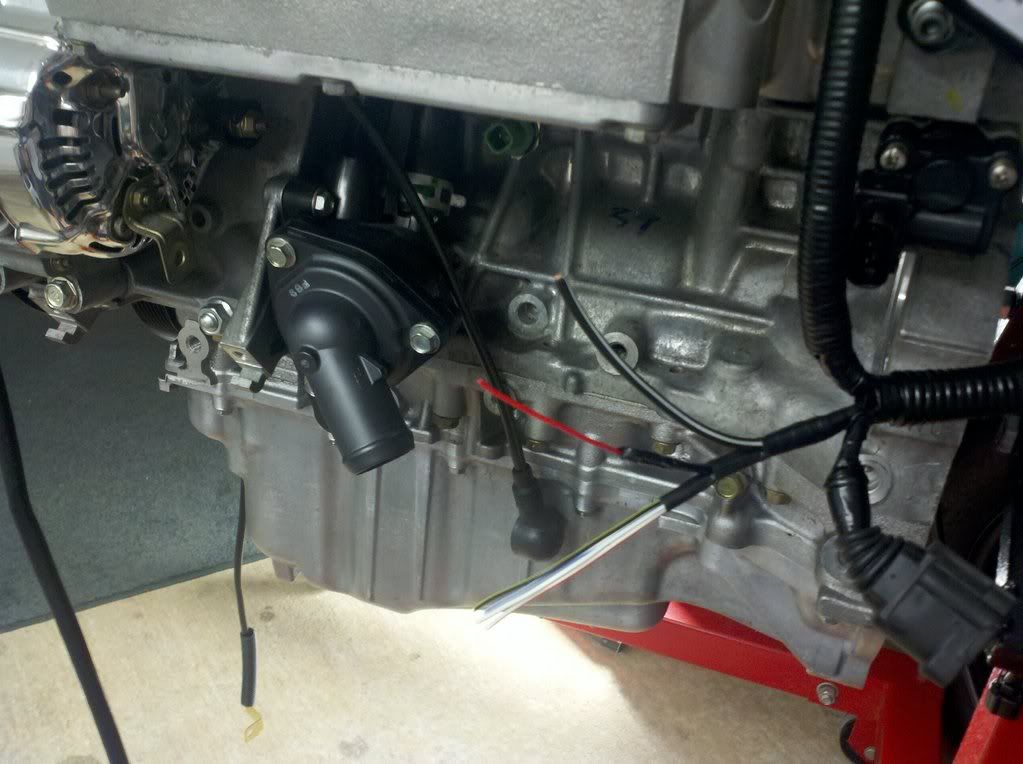
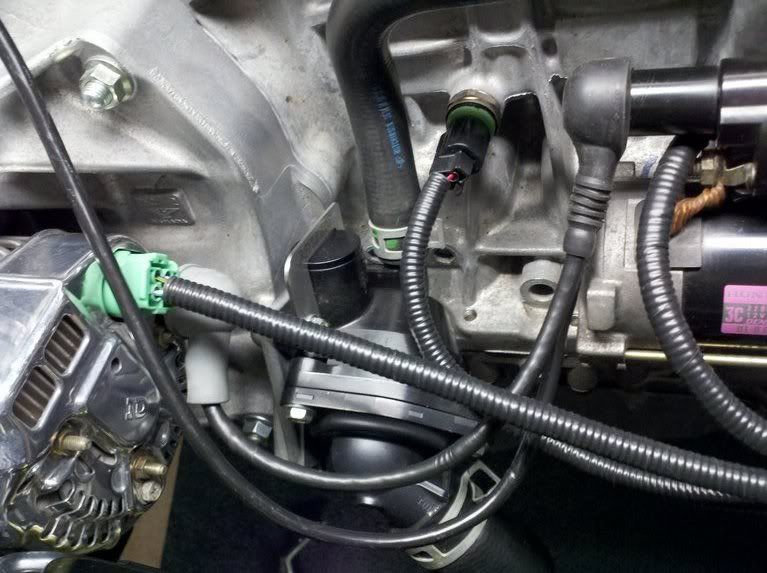
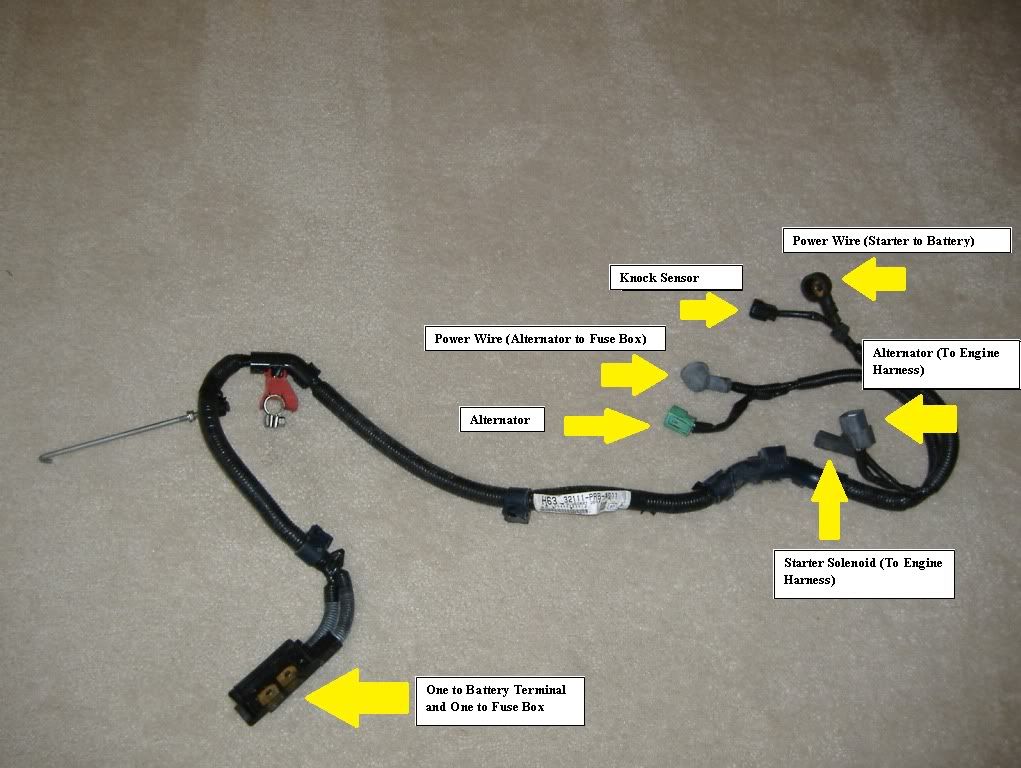
With the battery and fuse box retained in their OEM engine-bay locations, a fully disassembled RSX Type S charge harness can be adapted with little or no cutting; only the fuse-box connector ends need modifying and the rest is largely plug-and-play into the K20 engine harness. Typical layout uses 4-gauge cable for the starter, fuse-box, and alternator power runs, with a 2-gauge battery-negative-to-chassis ground (one builder cited 6 gauge as the Honda-specified power-cable size). A simplified single-feed layout runs one cable alternator-to-starter with a fuse-box jumper, which suits a trunk-mounted battery. The transmission housing (starter mounting) must be well grounded in addition to the chassis ground.
The donor charge harness bundles low-current engine sensor leads (knock sensor, alternator, starter solenoid) together with the heavy power cables; these signal leads should be separated and integrated into the engine harness. New battery cables are then made to length for the swapped chassis rather than splicing the factory heavy wire. If the fuse box is fed by a single main cable (ChaseBays-style layout), a solid copper or brass jumper plate must be fabricated and drilled to bridge the two fuse-box terminals. The gold fuse-box connector ends usually need their tips modified to seat correctly.

Important Caveats

  • Do not splice or extend the factory heavy cables; make new correctly sized cables instead.
  • Keep the alternator cable clear of the accessory belt and leave slack for engine movement; a chafed cable commonly blows the alternator fuse (Fuse 15 on an EK9) as soon as the ignition is switched on.
  • On a relocated (trunk) battery, upsize the cable to compensate for voltage drop over the longer run.
  • Whether the fuse-box jumper is strictly required is disputed among builders; verify current path across both fuse-box ports before omitting it.
  • Voltage instability in datalogs despite good cable readings can be a weak battery cell rather than a wiring fault.

DIY Installation Guide

No Installation Guide Yet

Have you completed this swap? Help the community by sharing your step-by-step installation guide!

Community Verification

1
user verified this swap
By k20jonny via K20A.org
Added 2 days ago

Find Parts

Looking for parts for this swap? Check out our recommended retailers:

Some links are affiliate/sponsored links — we may earn a commission at no extra cost to you. Disclosure.

Comments (0)